Introduction: The Death of the Speculative Narrative
For the better part of a decade, Tatu City was discussed almost exclusively in the future tense. It was a "vision," a "master plan," and a "projected" hub. By 2026, that narrative has died—replaced by the concrete reality of a functioning city.
The question for the modern investor, the returning diaspora family, or the local professional is no longer "Will it happen?" but rather:
"If I move my family here, will my daily life be easier or just more isolated?"
In 2026, property value in Tatu City is no longer driven by the hope of a secondary market flip; it is driven by utility. If the schools are good, the water runs, and the commute is predictable, the asset is bulletproof. If not, it’s just expensive land in Kiambu.
This deep-dive moves past the glossy marketing brochures to analyze the lived experience of Tatu City. We examine the functional pillars—education, mobility, and retail—that determine whether this city works as a home or just looks good on a balance sheet.

1. The Planning Philosophy: Infrastructure Before People
To understand daily life here, one must understand the sequencing. Unlike Nairobi’s traditional suburbs (Kilimani or Kileleshwa), where infrastructure is a reactive fix to over-densification, Tatu City is a Privatized Urban Ecosystem.
The "sequencing" advantage:
-
Power and Water: Tatu City operates its own power and water company. Residents in 2026 do not experience the "salty water" or frequent power surges common in the wider Nairobi Metropolitan area.
-
Zoning Integrity: In Tatu, you don't wake up to find a 15-story apartment block being built next to your single-family home. The separation of the Industrial Park from the residential precincts (like Kijani Ridge or Unity Homes) is legally and physically enforced.
This predictability is the primary "amenity" residents pay for. It is the luxury of not having to worry about basic municipal failures.
2. Schools: The Anchor of the Tatu Lifestyle
In 2026, education is the primary reason for residency in Tatu City. The city has successfully positioned itself as an educational hub, hosting some of the most prestigious institutions in East Africa.
The "School Run" Revolution
In Nairobi, the "school run" is a logistical battle that dictates where people live. In Tatu City, it is a 5-minute internal drive or a 10-minute walk.
-
Crawford International School: Offering the British Curriculum with world-class sporting and arts facilities.
-
Nova Pioneer (Primary & Secondary): Attracting tech-forward parents who value innovation-based learning.
Analyst Insight: Education as a Rent Anchor
From an investment perspective, schools create "sticky" tenants. Families who enroll their children in Crawford or Nova Pioneer commit to a 5-to-10-year residency. For a landlord, this translates to:
-
Lower Vacancy Rates: Families rarely move mid-term.
-
Higher Collection Rates: Education-focused tenants are typically high-credit-quality professionals.
3. The Commute Reality Check: Predictability vs. Proximity
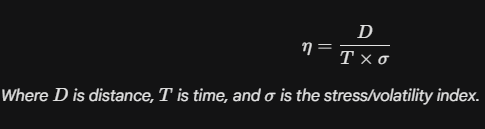
Let’s be candid: Tatu City is not "near" the Nairobi CBD. By distance, it is approximately 24km from the city centre. However, in 2026, the Commute Efficiency Ratio has shifted in Tatu’s favour.
We define commute efficiency as:
The Thika Superhighway & Northern Bypass Nexus
While a resident of Syokimau might spend 90 minutes covering 15km due to unpredictable gridlock, a Tatu City resident covers 24km in a predictable 45–55 minutes.
-
The Reverse Commute: In 2026, many Tatu residents actually work inside the city at the Tatu Industrial Park (home to over 70 companies like Unilever and Copia). For these people, the commute is 0.
-
The Hybrid Reality: For those working in Westlands or Gigiri, the Northern Bypass provides a streamlined route that bypasses the CBD chaos entirely.
4. Internal Mobility: The 15-Minute City
Tatu City is one of the few places in Kenya where walkability is a functional reality, not a buzzword.
Living Without a Car (Internally)
The city’s design includes dedicated pedestrian walkways and cycling lanes. In 2026, the internal mobility rhythm looks like this:
-
Morning: Kids cycling to Nova Pioneer.
-
Mid-day: Professionals from the Industrial Park walking to Tatu Central for lunch.
-
Evening: Residents of Unity Homes walking to the local park or retail kiosks.
This reduced dependence on vehicles for daily errands significantly lowers the "cost of living" in terms of fuel and time, even if the initial entry price for housing is higher.
5. Retail and Daily Conveniences: Function Over Spectacle
By 2026, the retail landscape in Tatu City has matured. It isn't trying to be Two Rivers Mall; it is trying to be a neighborhood service center.
The Tatu Central Hub
-
Supermarkets: Large-scale grocery anchors (e.g., Carrefour or Naivas) are fully operational.
-
Fitness: High-end gyms and wellness centers catering to the health-conscious demographic.
-
Dining: A mix of quick-service restaurants and cafes that serve as "third spaces" for the city's growing remote-work population.
The convenience factor here is proximity. You aren't fighting for parking; you are accessing services within a controlled environment.
6. Healthcare and Security: The Peace of Mind Premium
Medical Access
Beyond on-site clinics for minor emergencies, Tatu City’s location near Thika Road ensures proximity to major health hubs like Kenyatta University Teaching & Referral Hospital. In 2026, the city’s emergency response is integrated into the estate management system, providing a level of rapid response that is rare in unmanaged suburbs.
Security by Design
Security in Tatu City is a "layered" system:
-
Outer Perimeter: Managed by the Tatu City security team with 24/7 surveillance.
-
Precinct Gates: Secondary access control for specific estates like Kijani Ridge.
-
Digital Integration: Number plate recognition and visitor management apps are standard.
For the diaspora buyer, this "security as a service" is the most compelling reason to buy here. It removes the need for expensive individual house reinforcements (electric fences, dogs, multiple guards).
7. The Social Fabric: Community Over Anonymity
One of the most surprising developments in 2026 is the emergence of a "Tatu Identity."
Because the city is a gated, managed environment, it fosters a sense of community that is often lost in the sprawl of Nairobi.
-
The "School Gate" Community: Much of the social life revolves around school events and parents' networks.
-
Estate Management (HOA): Strong Homeowners' Associations ensure that noise levels are controlled and shared spaces are maintained.
This social cohesion supports long-term capital preservation. Well-managed communities do not decay; they mature.
8. Renting in Tatu City: The 2026 Market Dynamics
Who are the tenants?
The rental market in Tatu City is dominated by two profiles:
-
The Industrial Executive: Expatriates or C-suite Kenyans working within the SEZ (Special Economic Zone).
-
The Young Professional Family: Seeking a safer, cleaner environment for their children while working hybrid roles.
The "Yield" Reality
Investors should expect Rental Yields (Y) to hover between 7% and 8.5%.
While this is lower than the speculative heights of Kilimani’s Airbnb market, the Vacancy Rate (V) is significantly lower.
In 2026, Tatu City is a "sleep-at-night" investment. You aren't chasing the highest yield; you are chasing the most stable one.
9. Tatu City vs. The Competition: A Comparison
| Feature | Tatu City | Kilimani | Lavington |
| Noise Levels | Very Low | High | Moderate |
| Security | Centralized/High | Individual/Varied | Gated/Moderate |
| Utilities | Independent/Stable | Municipal/Volatile | Municipal/Volatile |
| Walkability | High (Integrated) | High (Urban) | Low (Suburban) |
| Commute to CBD | 45-60 Mins | 20-30 Mins | 25-40 Mins |
Final Verdict: Who Thrives in Tatu City?
Tatu City in 2026 is not a "get-rich-quick" land flip. It is a lifestyle-first urban center.
It is perfect for:
-
Families who prioritize education and outdoor safety.
-
Diaspora Buyers who want a turnkey home with international-standard management.
-
Conservative Investors looking for long-term rental stability and capital protection.
It is less ideal for:
-
Nightlife Enthusiasts who want to be 5 minutes from the bars of Westlands.
-
Commuters who have to be in the CBD strictly by 7:30 AM every day without flexibility.
Choosing a home or an investment in Tatu City requires a deep understanding of the specific precincts—from the luxury of Kijani Ridge to the efficiency of Unity Homes.
If you are evaluating Tatu City for your family’s future or your investment portfolio, let’s move past the brochures.
📞 0713595863 | 0722506632
Speak with Ochieng Wycliffe for a technical suitability audit of Tatu City properties.